Gil Berquist
Stranger in a Strange LandGil Berquist, also called Gilbert or Gil, is an executive assistant to Secretary General Joseph Douglas whose official work includes chaperoning visitors. He becomes one of the government’s practical gatekeepers around Valentine Michael Smith: first managing reporters’ demands to see the supposedly ill Man from Mars, and later participating in an armed attempt to find Smith after Jill Boardman has taken him from the hospital. Berquist’s role gives the official policy of concealment a human face, but his confidence in that policy falters when he encounters an event it cannot explain.
Position in the Government
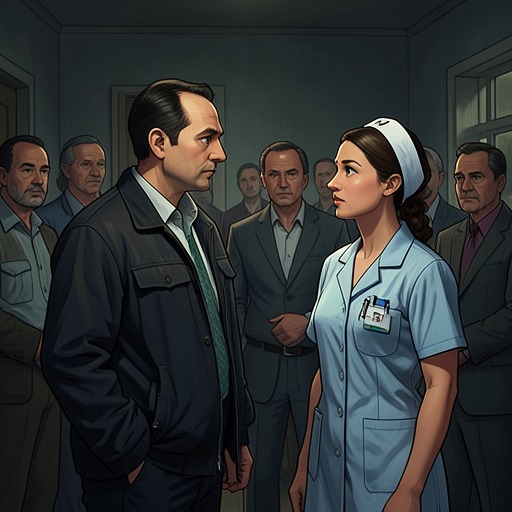
Berquist belongs to Joseph Douglas’s large group of executive assistants and specializes in accompanying official visitors. When Ben Caxton arrives seeking Smith, Berquist is already emerging from the office with a ready handshake and a welcoming expression. The narrator describes him as one of Douglas’s “stooges,” a pointedly skeptical framing that sets his administrative function against Caxton’s distrust of the government’s account.
Berquist says he has been sent to relieve Dr. Broemer, who is nearly overwhelmed by the press. He presents access control as protection for Smith: every kind of reporter wants an interview, he argues, and granting them all access would wear the patient down. He cites a reporter who wanted to interview Smith about Martian love lives, reducing the press’s interest to an intrusive spectacle while casting himself as the buffer between Smith and an indiscriminate crowd.
The Dispute with Caxton
Caxton does not accept the boundary Berquist sets. He insists that he wants to see Smith, while Berquist offers to take him somewhere quiet and answer questions instead. The encounter grows more tense when Caxton publicly says he has heard that the person interviewed on television the previous night was not the real Man from Mars. He presses Berquist to name whom he is supposedly slandering, making the dispute about more than ordinary press access: Caxton is challenging whether the government has shown the public the actual Smith at all.
With the reception hall listening, Berquist briefly glances at the Fair Witness before regaining his composure. He warns Caxton that the accusation could earn him both the interview he wants and a lawsuit, then goes into the inner office. He returns having arranged access, though he tells Caxton that he does not deserve it and insists that he come alone because Smith is a sick man. Caxton refuses that condition. The exchange reveals Berquist’s methods—public reassurance, controlled access, and the suggestion of legal consequences—while also showing that Caxton’s open challenge can force the government’s gatekeeper to act.
The Search for Smith
Berquist appears again in the effort to recapture Smith after Jill has taken him away from the hospital. At Jill’s door, an armed team announces a warrant for her arrest. The lock is heated until the door opens, and Berquist’s men enter looking for Smith. One man, Johnson, pushes past Jill and heads toward the bedroom despite her demand to see the warrant and credentials.
Smith makes Johnson disappear. The remaining evidence in the room is grass where the man had stood; Johnson himself is nowhere to be found. Berquist responds not by addressing Jill but by looking toward Smith and asking what has been done with Johnson. His immediate question marks a sharp break in the authority he had exercised with Caxton. Here the search party’s power to force entry does not translate into control over what happens inside, and Berquist has no explanation for the missing man.
Narrative Role
Berquist connects two stages of the government’s handling of Smith: the managed public story, in which access is restricted and a disputed television appearance goes unexamined, and the physical attempt to recover Smith after he escapes. In the first, he can still speak as an official intermediary, invoking Smith’s health and the press’s demands. In the second, Smith’s inexplicable intervention leaves him asking what happened. The contrast makes Berquist a witness to the limits of administrative power: the government can regulate who gets an interview, but it cannot make the extraordinary conform to its procedures.